

How to Choose Web Scraping Services: A Buyer’s Guide for Businesses
In This Article:
- What Are Web Scraping Services?
- What Data Can Businesses Collect?
- Managed Services vs. Scraping Tools vs. In-House Scrapers
- How a Web Scraping Project Works
- Common Web Scraping Challenges
- How Much Do Web Scraping Services Cost?
- How to Choose a Web Scraping Partner
- Frequently Asked Questions
- Get Web Data Your Team Can Use
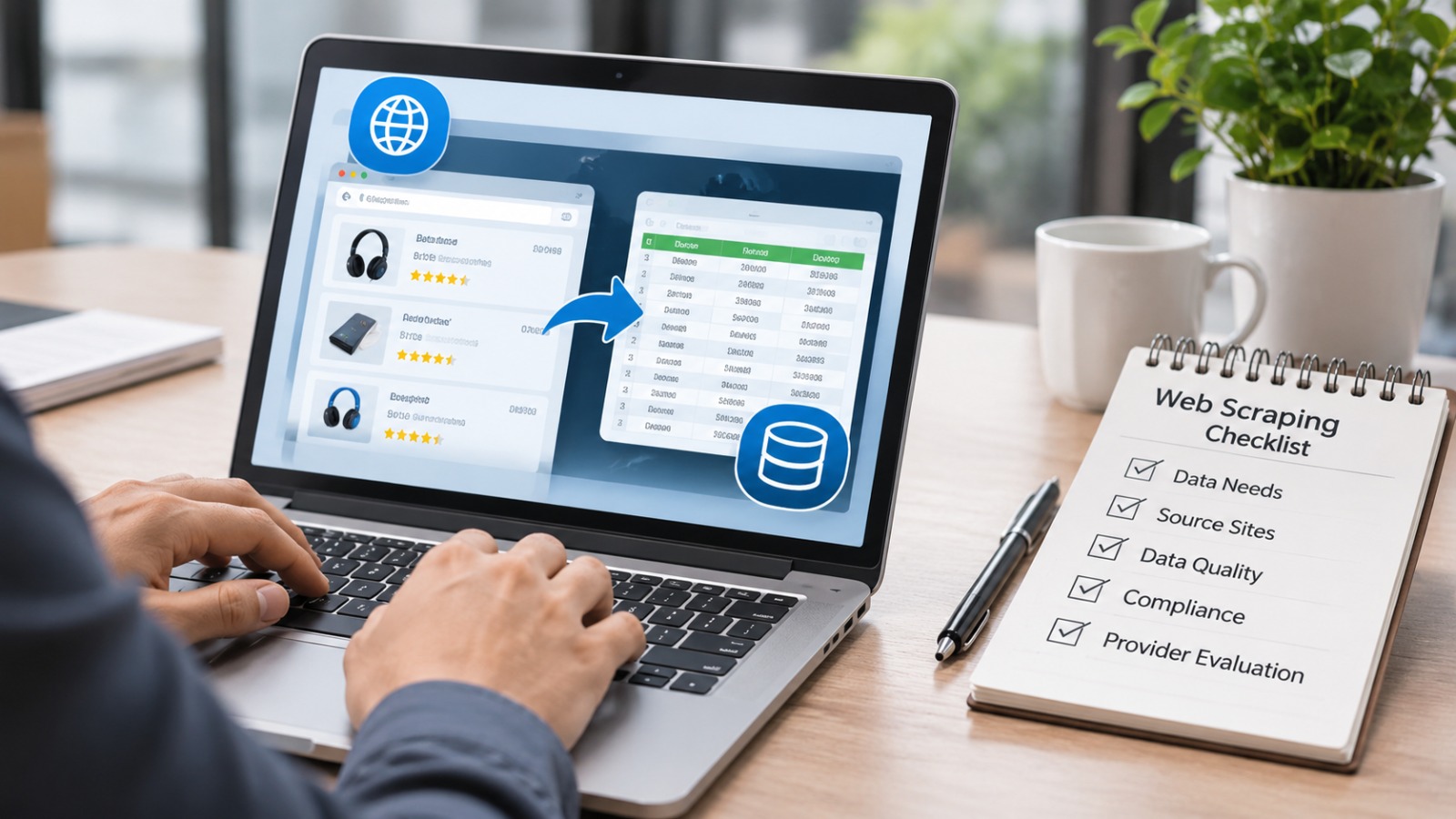
Web scraping services collect information from websites and deliver it as structured data your team can use. The information many businesses need is already online: competitor prices, product specs, property listings, job postings, and customer reviews. The hard part is collecting it at volume, keeping it current, and getting it clean enough to trust.
This buyer’s guide explains how web scraping services work, what they can collect, what affects cost, and what to check before you choose a provider.
What Are Web Scraping Services?
A web scraping service is an outsourced data collection solution. A provider builds and runs automated scripts that gather defined information from websites, then cleans it and delivers it in a usable format.
You decide what data you need, where it should come from, and how often it should arrive. The provider handles the extraction and quality work. Your team receives a finished dataset instead of a set of raw web pages.
That is the main difference from copying data by hand. Manual collection may work for a few dozen records, but it becomes slow and error-prone across thousands of records or repeat updates. Scraping removes the repetitive work, and a quality review catches what automation misses.
If your project also draws on documents, catalogs, or business records, data collection services can bring those sources into the same dataset.
What Data Can Businesses Collect?
The right dataset depends on the decision it needs to support. These are some of the most common use cases:
| Data type | Common sources | How businesses use it |
|---|---|---|
| Product details and pricing | Retail and eCommerce sites | Compare prices, track assortments, and update catalogs |
| Business profiles and contacts | Directories and association portals | Build outreach lists and research target accounts |
| Real estate listings | Property sites and listing pages | Track inventory, pricing, and agent details |
| Customer reviews and ratings | Marketplaces and service sites | Spot product issues and monitor brand perception |
| Job postings | Career platforms | Follow hiring trends and find recruitment opportunities |
| Event details | Public event pages | Find prospects, partners, and industry activity |
| Social media mentions and engagement | Social platforms | Support brand monitoring and sentiment analysis |
| Text, image, and other content | Websites and online platforms | Create structured AI and machine learning training data |
For a retailer, that could mean monitoring competitor pricing across product categories. For a staffing firm, it could mean tracking new job postings by region. For an insurance team, it could mean researching providers and market activity across public sources.
The common thread is structure. Scattered web content only becomes useful once every record follows the same fields and format.
Managed Services vs. Scraping Tools vs. In-House Scrapers
Managed web scraping services are usually the best fit when you need reliable data but do not want to run the collection process yourself. Tools and in-house scrapers can also work, depending on your technical resources and how often you need the data.
| Option | Best for | What your team handles | Main limitation |
|---|---|---|---|
| Scraping tool | Small, simple, or occasional jobs | Setup, runs, fixes, and data cleanup | Can struggle with complex sites and larger projects |
| In-house scraper | Companies with developers and ongoing data needs | Building, hosting, maintenance, and quality checks | Takes engineering time away from other priorities |
| Managed web scraping service | Teams that want finished data | Defining requirements and reviewing results | Less hands-on control over the collection process |
Maintenance is the cost that is easiest to underestimate. Websites change their layouts, and a scraper that worked last month can stop working or quietly return incomplete data. Someone has to notice the problem, fix it, and check the output.
With a managed service, that work sits with the provider. Your team can spend its time on analysis instead of upkeep.
How a Web Scraping Project Works
A well-run web scraping project starts with clear requirements and ends with data your team can use right away. Most projects follow six steps:
- Define the goal. Agree on the business question, target websites, required fields, volume, and update frequency.
- Review the sources. Confirm that each source is appropriate to use and check how its pages are built. Dynamic or JavaScript-heavy sites may need extra work.
- Build the scraper. Create customized scripts that capture the agreed fields from each source.
- Run a sample. Test a small batch first so you can confirm the fields and format before the full run.
- Clean and verify the data. Remove duplicates, standardize formats, and check the output against the project requirements.
- Deliver and schedule. Send the data as Excel, CSV, Google Sheets, XML, or JSON files, or directly into your system. Set a schedule if the data needs regular updates.
The sample stage matters more than it may seem. It is much cheaper to change a field definition after 100 records than after 100,000.
Common Web Scraping Challenges
The hardest part of web scraping is keeping the data accurate after the first run. These problems can affect any project, so ask how a provider handles each one.
| Challenge | What can go wrong | What to expect from a provider |
|---|---|---|
| Site layout changes | Fields go missing or land in the wrong column | Monitoring and prompt script updates |
| Dynamic pages | Simple scripts miss content that loads after the page opens | Scripts built for JavaScript-heavy pages |
| Blocks and rate limits | Requests fail and the dataset is left incomplete | Reasonable request rates and a clear policy on what it will not bypass |
| Inconsistent formats | Prices, dates, and units differ between sources | Agreed rules that standardize every field |
| Duplicate records | The same product or business appears several times | De-duplication before delivery |
| Outdated data | Prices and listings change after collection | A refresh schedule that matches how often the data changes |
How Much Do Web Scraping Services Cost?
Web scraping costs depend on how much work it takes to keep the data reliable, not only on the number of records. A quote is usually shaped by these factors:
- Number of sources: Each website may need its own script.
- Site complexity: Dynamic pages and frequent layout changes take more work.
- Data volume: More pages and records take longer to collect and check.
- Update frequency: A daily feed costs more to run than a one-time project.
- Quality requirements: Field-level verification adds review time.
Providers may charge per record, per project, or a recurring monthly fee. Before you compare quotes, confirm that each one covers setup, maintenance, quality checks, and delivery. A lower price can become the more expensive option if script fixes or data cleanup are billed separately.
At 247Digitize, we review your sources, fields, volume, and schedule first, then provide a quote based on your project.
How to Choose a Web Scraping Partner
The best web scraping company for your project is the one that can show how it keeps data accurate, current, and compliant. Price matters, but low-quality data can cost more to fix than it did to collect. Ask these questions before you commit:
- Can they handle your sources? Ask whether they have worked with sites similar to yours, including dynamic or JavaScript-heavy pages.
- How do they check quality? Ask how they remove duplicates, verify records, and catch incomplete data.
- Can they provide a sample? A sample shows more about data quality than a sales presentation does.
- What happens when a website changes? Find out who monitors for problems and how quickly fixes are made.
- Can the project scale? Confirm that they can handle more sources, more records, or a more frequent schedule as your needs grow.
- How will the data arrive? Make sure the format and delivery method fit your existing workflow.
- How do they handle compliance and security? Ask which sources they will not scrape, how personal data is handled, and who can access your project data.
A good provider should answer these questions plainly. They should also tell you when a data source is not a good fit.
Frequently Asked Questions
What do web scraping services do?
Web scraping services collect specific information from websites, clean it, and deliver it in a structured format. Common examples include product prices, business contacts, real estate listings, reviews, and job postings.
How much do web scraping services cost?
Cost depends on the number of sources, data volume, site complexity, update frequency, and quality requirements. A one-time scrape of a simple site will usually cost less than ongoing collection from several complex sites.
What format will I receive the data in?
Data is commonly delivered in Excel, CSV, or Google Sheets. It can also be delivered directly into your system, depending on the project.
Can web scraping handle dynamic websites?
Yes. Dynamic and JavaScript-heavy websites often need more advanced scripts than simple static pages, so they should be reviewed during project scoping.
What is the difference between web scraping and data extraction?
Web scraping refers specifically to collecting data from websites. Data extraction is a broader term that also covers pulling information from sources such as documents.
Should I use a scraping tool or outsource the work?
A tool may be enough for a small, occasional job. Outsourcing makes more sense when you need large volumes, regular updates, complex sources, or verified data without assigning internal staff to the work.
Is web scraping a one-time project or an ongoing service?
It can be either. A one-time project suits market research or building a new database, while recurring collection suits data that changes often, such as prices, listings, and job postings.
Get Web Data Your Team Can Use
Web scraping delivers value only when the final data is accurate, consistent, and ready for the people who need it. Clear requirements and the right partner make that possible.
247Digitize combines smart automation with human precision to turn scattered web data into clean, structured datasets. We support businesses across retail, real estate, staffing, insurance, and other industries, with delivery in the format your team prefers.
Ready to scope your project? Learn more about our web scraping services, contact our team for a free quote, or call 888-524-7348.

